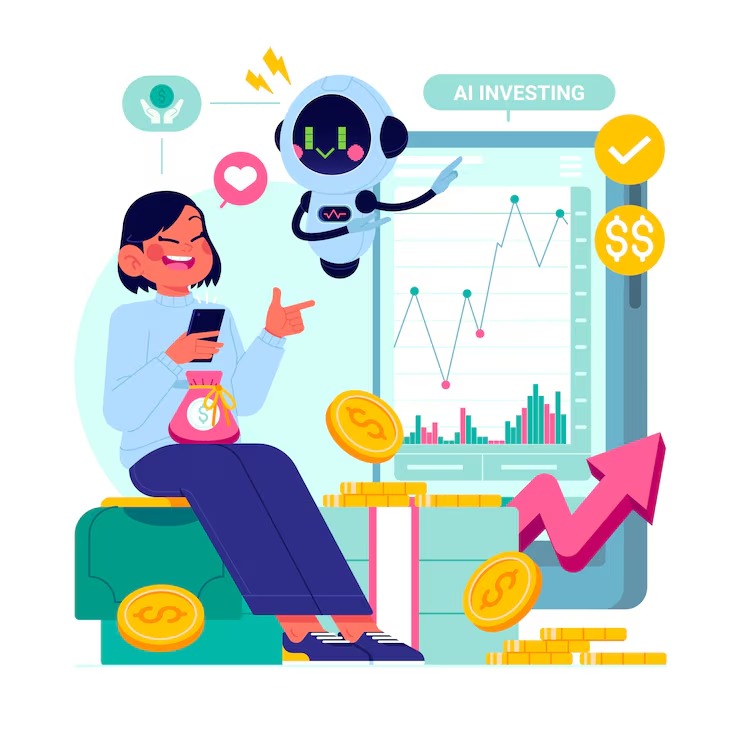
Financial technology is no longer just about automation. It is about augmentation. Today’s smartest tools do not just execute they understand. Whether you are trading crypto, building a retirement portfolio, or managing monthly expenses, AI is stepping in as a dynamic partner.
Three innovations are leading the charge: the AI Trading Assistant, the AI Investment Advisor, and the Personal Finance Assistant. Each one is reshaping how we interact with money making financial literacy more accessible, decisions more data-driven, and outcomes more aligned with personal goals.
From Algorithms to Allies: The Shift in Money Management
Traditional financial tools were built to calculate. Today’s AI tools are built to collaborate. They do not just crunch numbers they learn your habits, anticipate your needs, and adapt to your emotional and financial rhythms.
This shift reflects a deeper cultural change. People want more than dashboards. They want dialogue. They want tools that feel intuitive, responsive, and even empathetic. That is where AI shines.
Meet Your AI Trading Assistant: Speed, Strategy, and Sentiment
The AI Trading Assistant is designed for fast-paced environments like crypto and forex. It monitors market conditions in real time, analyzes sentiment across social platforms, and helps you make informed trades with minimal delay.
Unlike static bots, these assistants evolve. They learn from your trading style, adjust to volatility, and even flag emotional decision-making patterns that could derail your strategy.
Core Functions:
- Real-time asset tracking
- Sentiment analysis from news and social media
- Adaptive trade recommendations
- Risk profiling and alerts
- Integration with decentralized exchanges
For traders, this is not just a tool it is a tactical edge.
The AI Investment Advisor: Long-Term Vision Meets Machine Precision
The AI Investment Advisor is your strategic planner. It helps you build and maintain a diversified portfolio tailored to your life goals, income, and risk tolerance.
It goes beyond asset allocation. It models future scenarios, optimizes for tax efficiency, and even adjusts based on major life events like marriage, career changes, or market downturns.
Capabilities Include:
- Personalized portfolio construction
- Retirement and wealth-building simulations
- ESG and ethical investing filters
- Tax-aware rebalancing
- Behavioral nudges to reduce impulsive decisions
This is where AI becomes not just smart—but wise.
Personal Finance Assistant: Everyday Decisions, Elevated
The Personal Finance Assistant is built for daily life. It helps you manage spending, save intentionally, and stay on top of bills without stress or spreadsheets.
What makes it powerful is its tone. It does not just notify it converses. It learns your lifestyle, adapts to your financial personality, and offers guidance that feels more like a friend than a financial planner.
Key Features:
- Smart budgeting based on real behavior
- Expense tracking with contextual insights
- Automated savings and bill reminders
- Financial wellness tips tailored to your habits
- Goal setting with progress feedback
For many users, this is the first step toward financial confidence.
How People Are Using AI to Rethink Wealth
Across the globe, people are using these tools in creative ways:
- Crypto enthusiasts use their AI Trading Assistant to time entries and exits based on sentiment spikes.
- Freelancers rely on their Personal Finance Assistant to smooth out income variability and plan for taxes.
- Families use an AI Investment Advisor to simulate college savings plans and retirement timelines.
- Digital nomads combine all three to manage multi-currency portfolios and lifestyle budgeting.
These are not edge cases. They are the new normal.
What AI Gets Right and Where It Still Needs Us
Strengths
- Speed and scale: AI can process thousands of data points instantly.
- Personalization: It adapts to your financial behavior and goals.
- Consistency: No emotional bias or fatigue.
- Accessibility: Democratizes financial advice for all income levels.
Limitations
- Context gaps: AI may misinterpret nuanced life events.
- Privacy concerns: Sensitive data must be handled with care.
- Regulatory ambiguity: Especially in crypto, compliance is evolving.
- Emotional nuance: AI still struggles with deep empathy.
The best outcomes come from collaboration not delegation.
Designing Emotionally Intelligent Financial Tech
The future of financial AI is not just smarter it is more human. Developers are now focusing on tone, timing, and emotional resonance. The goal is not just to inform, but to support.
Imagine a Personal Finance Assistant that notices you are stressed and offers to simplify your budget. Or an AI Investment Advisor that gently nudges you away from panic selling during a downturn. These are not fantasies. They are prototypes.
Emotional intelligence is becoming a core feature not a bonus.
Looking Ahead: Trends That Will Shape the Future
Here is what is coming next:
- Voice-first financial coaching
- AI-powered financial literacy for underserved communities
- Integration with mental health platforms
- Decentralized finance tools with embedded AI advisors
- Hyper-personalized financial rituals based on biometric data
As these tools evolve, so will the questions around ethics, bias, and transparency. The conversation is just beginning.
Final Thoughts: The Human-AI Partnership in Finance
The rise of the AI Trading Assistant, AI Investment Advisor, and Personal Finance Assistant is not about replacing human judgment. It is about enhancing it. These tools offer clarity, confidence, and control qualities that are often missing in traditional finance.
What makes all of this truly accessible is the quiet infrastructure behind it platforms like Ment Tech that focus on building the connective tissue between AI and real-world financial needs. By developing systems that are modular, compliant, and emotionally aware, they help turn abstract intelligence into practical support. Whether it’s powering a smarter AI Trading Assistant, refining the logic behind an AI Investment Advisor, or enabling a more intuitive Personal Finance Assistant, their work often sits behind the scenes but it’s what allows these tools to feel less like software and more like something that actually understands you.
 Site Title
Leave a comment